Mouse control in Haarlem: find the source first
A mouse can squeeze through a gap of about 6 mm, roughly the thickness of a pencil. Effective mouse control therefore starts with detective work: along pipe entries, behind kitchen plinths, around the meter cupboard and in the crawl space. Droppings, greasy smears and gnaw marks show us which routes the mice are using.
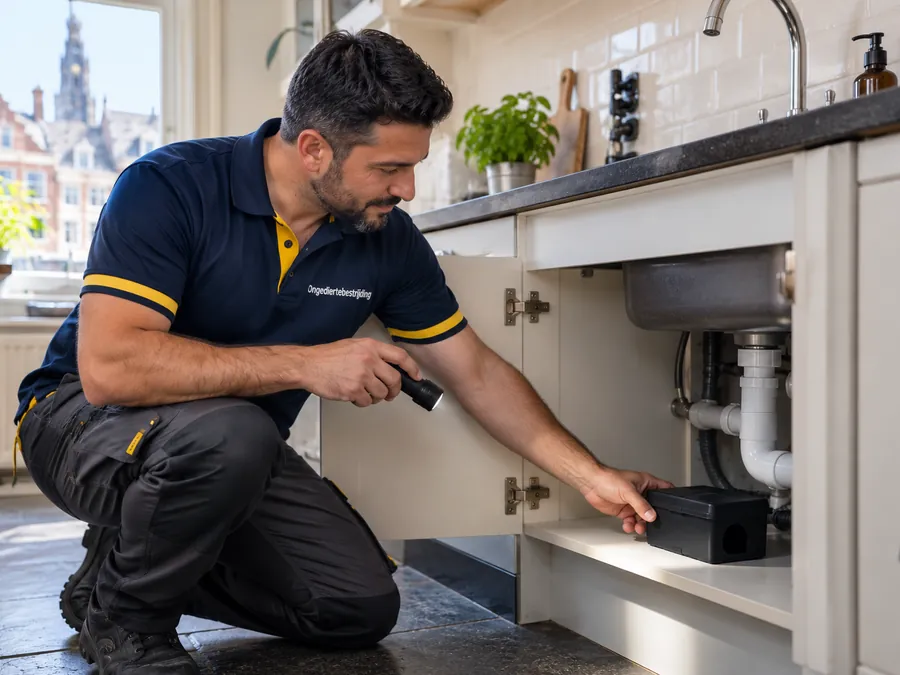
Only once we know the entry points do we choose our tools. Snap traps work well where children and pets cannot reach. Bait boxes containing a professional product are locked and placed at fixed points; such products may only be used by a certified pest controller. At the same time we seal the gaps with materials mice cannot gnaw through, such as steel wool, stainless mesh or metal cover plates.
Signs of mice in the house
Mice are shy and mostly active in the evening and at night, so you usually notice what they leave behind:
- Small dark droppings in cupboards, drawers and behind appliances.
- Gnaw marks on packaging, cables or the bottom of a door.
- A sharp, musty smell in a closed cupboard or the meter cupboard.
- Rustling or pattering in the floor, the ceiling or behind a stud wall.
- Nesting material made of shredded paper, insulation or fabric in a warm, quiet corner.
If you recognise one or more of these signs, do not wait too long. A few mice can grow into a sizeable group within a single season.
Why mice move indoors
In autumn mice go looking for warmth and food, and a house offers both. House mice can stay indoors all year round; wood mice mainly come in from gardens and green verges once it turns colder outside. Bird food on the patio, crumbs under the sofa and a bag of dog food in the shed make your home even more appealing.
Leaving them be is not a good idea. Mice gnaw electrical cables and insulation, and their droppings and urine contaminate food and worktops. A group also spreads easily along a row of houses.
What you can do yourself – and what to avoid
You can prevent a lot by keeping food out of reach: store supplies in glass jars or lidded tubs, put the cat's bowl away at night and clear up crumbs straight away. A snap trap with a dab of peanut butter can catch a single mouse; set it along the wall, which is where mice prefer to run.
Do not scatter DIY-store poison loose in cupboards or the crawl space. Children and pets can get to it, and a poisoned mouse may die somewhere under the floor, leaving a smell. Nor should you rely on a plug-in ultrasonic device as your only solution. If you hear heavier thumping or find much larger droppings, you may have rats instead – see our page on rat control.
Keeping mice out after treatment
After successful treatment, things only stay quiet if the entry points stay closed. So check the crawl-space vents now and then, the gaps under outside doors and any holes around new pipes after building work. A brush strip under the back door and fine mesh behind air bricks keep mice out without blocking the airflow.
If you live in a terrace or a building with a shared crawl space, talk to the neighbours or the VvE (owners' association): mice simply move on to the next home. For other pests in the house or garden, our pest control in Haarlem team can help too.